Brown or Yellow Well Water: Tannins vs Iron and How to Fix It
Tea-colored, yellow or brown well water usually comes from one of two things: tannins (natural organic matter) or iron. They need different treatment, and a glass of water tells them apart.
The 24-hour glass test
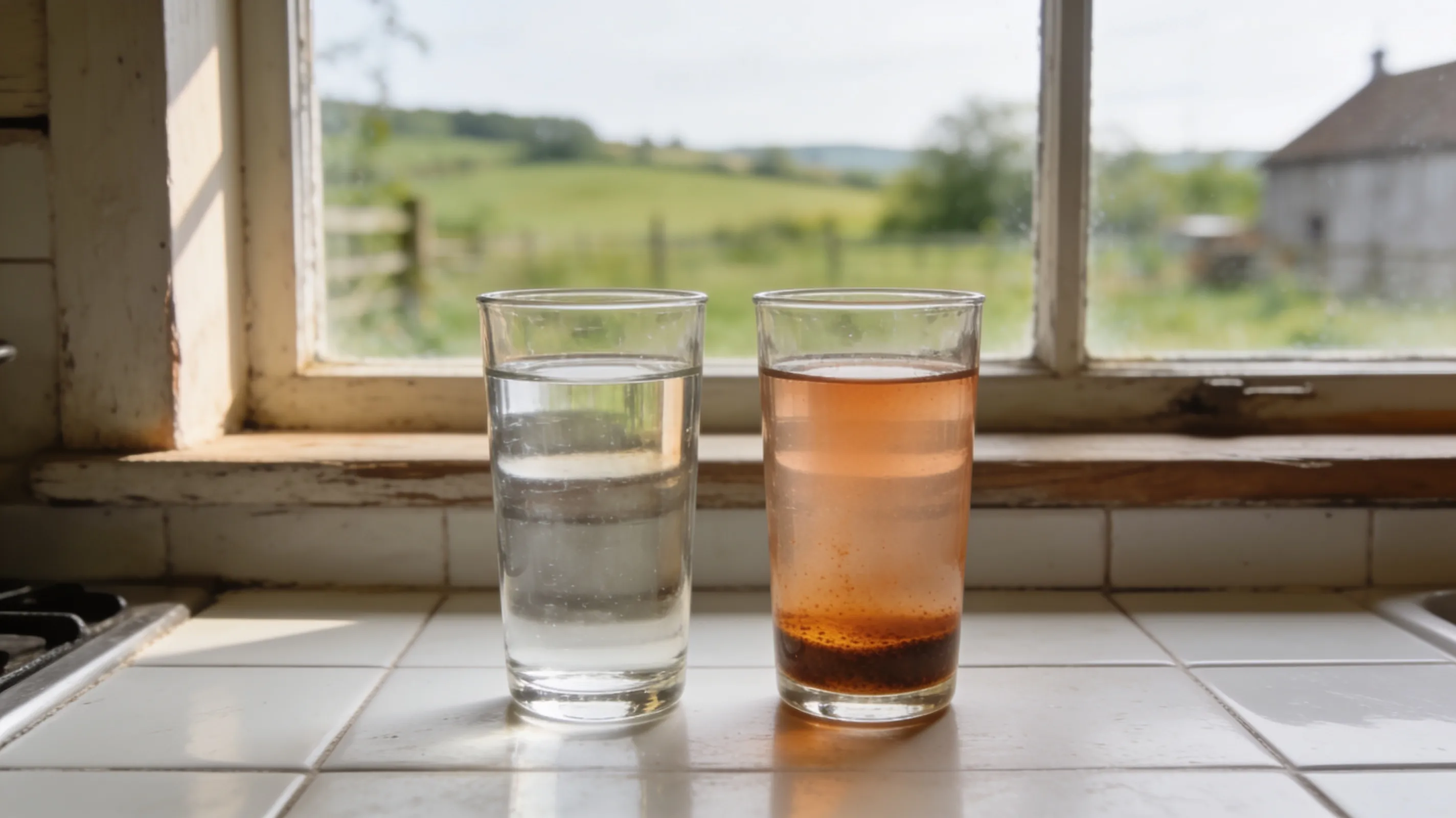
| After several hours | Likely cause | Read next |
|---|---|---|
| Orange-brown layer settles, water above clears | Iron | Orange stains / iron guide |
| Fine particles settle, water clears | Sediment or silt | Cloudy water guide |
| Whole glass stays evenly yellow or tea-colored | Tannins | Keep reading |
| Some settles, but water stays tinted | Tannins and iron together | Needs a lab test before buying anything |
What tannins are and why your well has them
Tannins are natural organic compounds released as leaves, roots and peat break down. Rain and groundwater carry them down into aquifers. They're most common in shallow wells and in low, wet, swampy or coastal areas. Deeper wells tend to have fewer, because soil and rock filter organic matter out on the way down.
The EPA treats color as a secondary contaminant with a guideline of 15 color units. In other words, it's about looks and taste, not a health limit. Tannins can also give water a faintly bitter or earthy taste and stain fabric and fixtures yellow.
What to test for
- Tannins (ask the lab, as not every basic panel includes them)
- Iron and manganese: tannins can bind iron and make it much harder to remove
- pH and hardness: help size a combined system
- Total coliform bacteria: especially for shallow wells
Fixes
| Treatment | Best for | Watch out for |
|---|---|---|
| Anion exchange (tannin) system | The standard whole-house fix for tannins | Regenerates with salt. Iron or hardness can foul it, so it's often paired with a softener or iron filter. |
| Mixed-bed tannin + softener | Tannins plus hard water in one tank | Must be sized for both. Get a lab test first. |
| Activated carbon | Taste and slight color | Fills up quickly with heavy tannins. |
| Reverse osmosis at the kitchen tap | Clear drinking water only | Doesn't fix laundry or fixture staining. |
Using UV for bacteria? Color and organic matter block UV light and reduce its effect. Remove the tannins before a UV unit, and check the UV maker's water quality limits.
Related problems
- Orange stains (iron)
- Black stains (manganese)
- Cloudy well water
Frequently asked questions
Why is my well water brown all of a sudden?
Sudden brown water often follows heavy rain, flooding, pump work or a drop in the water level, which stir up sediment or let surface water in. Use other water for drinking and test for bacteria. If it is iron or tannins that never settle, use the glass test above.
How do I clear up brown well water?
Match the fix to the cause: a sediment filter for particles, an iron filter for iron that settles, and an anion exchange tannin system for color that stays evenly mixed.
What are tannins in well water?
Tannins (also called humic or organic matter) are natural compounds from decaying leaves, peat and other plant material. They seep into groundwater and tint it yellow to tea-brown. They are most common in shallow wells and in wet, swampy or coastal areas.
Are tannins in well water harmful?
Tannins are mainly a color, taste and staining problem. Color is a secondary (non-health) contaminant: EPA’s guideline is 15 color units. But if your well is shallow and the color comes with heavy rain, also test for bacteria, because the same path that carries tannins can carry surface water.
Will a water softener remove tannins?
A standard softener does not remove tannins well. Tannin removal usually uses an anion exchange resin, sometimes mixed with softener resin in one tank. Both kinds regenerate with salt.
How do I know if it is tannins or iron?
Do a glass test. Fill a clear glass and let it sit for several hours. If an orange-brown layer settles at the bottom and the water above clears, it is likely iron. If the whole glass stays evenly tinted, tannins are likely.
Sources
- Secondary Drinking Water Standards: Guidance for Nuisance Chemicals, U.S. EPA
- Iron and Manganese in Private Water Systems, Penn State Extension
- Private Drinking Water Wells, U.S. EPA
- Protect Your Home’s Water, U.S. EPA
- Flooded Private Wells (fact sheet), Oregon Public Health Division, via Polk County
Sources checked October 26, 2026. Found an error? Tell us and we will fix it.